When designing industrial machinery, stage rigging, or automotive fixtures, traditional threaded fasteners often create bottlenecks. Operators waste time with wrenches, and threads wear out over unpredictable cycles.
The Mushroom-Head Quick Release Ball Lock Pin (Series: SNBLP000002) offers a zero-tool, high-security alternative. However, achieving maximum safety and efficiency requires understanding how to properly select and configure these components based on technical specifications.
1. Anatomy of a Positive Locking Fastener
Unlike simple friction-fit detent pins that can vibrate loose, the SNBLP000002 relies on a positive locking mechanism.
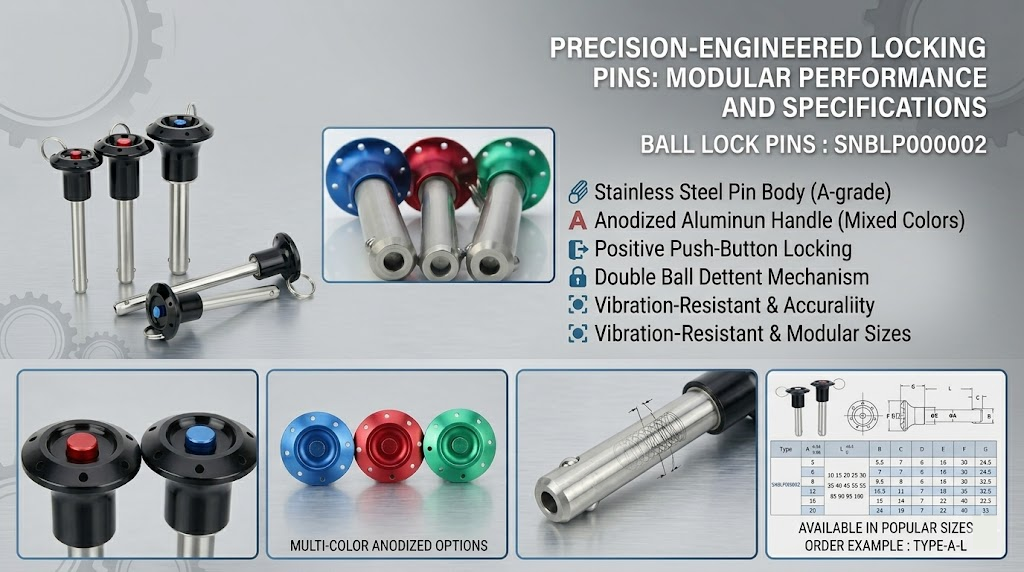
The Core Mechanics: Dual hardened stainless steel locking balls project past the shaft diameter (Column A). An internal spring-loaded plunger forces these balls outward, mechanically blocking the pin from slipping out under lateral load or high vibration.
The Operation: The pin remains completely locked until the operator physically depresses the aluminum button. This retracts the plunger, allowing the balls to drop into the shaft body for instantaneous removal.
2. High-Grade Material Composition for Harsh Environments
Material integrity is paramount when specifying quick-release components for heavy-duty applications. The SNBLP000002 optimizes weight and durability by combining distinct materials:
Pin Shaft, Spring, Balls & Ring: Stainless Steel. Provides exceptional shear strength, wear resistance, and long-term protection against marine or chemical corrosion.
Handle & Button: Anodized Aluminum. Minimizes overall component weight while maintaining high impact resistance. The black anodized finish prevents oxidation.
3. Smart Visual Management: Color-Coded Operation
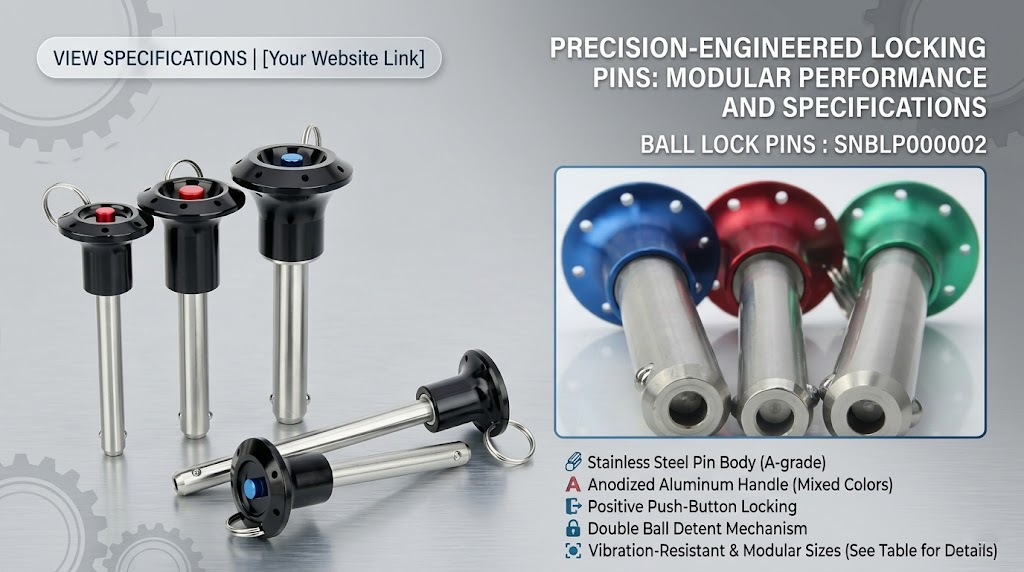
A critical feature highlighted in modern shop floors is visual management (Lean Manufacturing). The SNBLP000002 features an optional color-coded aluminum button configuration:
Red Button: Typically reserved for critical safety locks, emergency release points, or primary locking zones.
Blue Button: Used to designate secondary adjustments, specific tool-change parts, or operational positioning.
Natural/Silver Button: Ideal for standard configurations where high-contrast visibility is not required.
By deploying mixed button colors on a single piece of equipment, engineers can create intuitive, mistake-proof adjustment sequences for operators (Poka-Yoke).
4. Technical Dimensional Selection & Load Matching
Choosing the right pin requires precise matching of your fixture’s shear loads to the pin’s diameter (A) and grip length (L). Referring to the technical specification datasheet, the SNBLP000002 supports scalable options from light duty to heavy industrial setups:
Small Diameter (A: 5mm – 8mm): Best suited for electronic cabinetry, light fitness equipment, or precision alignment fixtures where space is restricted.
Medium Diameter (A: 10mm – 14mm): The industry standard for automotive racing setups, material handling racks, and modular welding tables.
Large Diameter (A: 16mm – 20mm): Engineered for high-load applications including heavy machinery assembly, heavy construction scaffolding, and theatrical truss rigging.
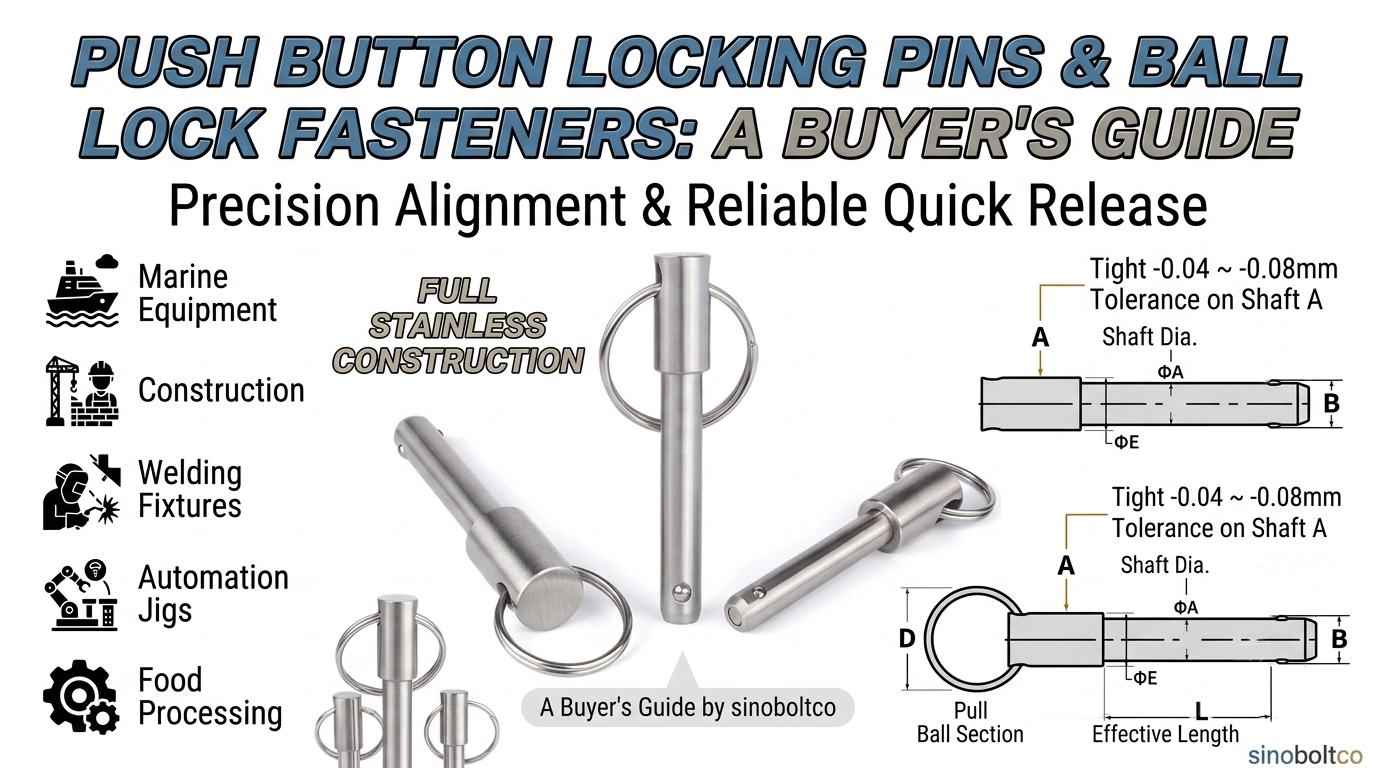
Engineering Note on Tolerances: The pin shaft diameter features a precise negative tolerance (-0.04mm to -0.08mm). This guarantees a clean, slip-fit installation into standard reamed holes without excessive play or mechanical binding.
5. How to Order for Your Project
To ensure a perfect fit, always specify the part using the standard formula: Type – Shaft Diameter (A) – Grip Length (L).
Example: For a setup requiring an 8mm diameter pin with a useful clamping length of 45mm, the correct order code is SNBLP000002-8-45.
Each pin comes standard with an integrated stainless steel split ring, allowing you to attach a retaining lanyard to prevent dropped or lost hardware on the shop floor.