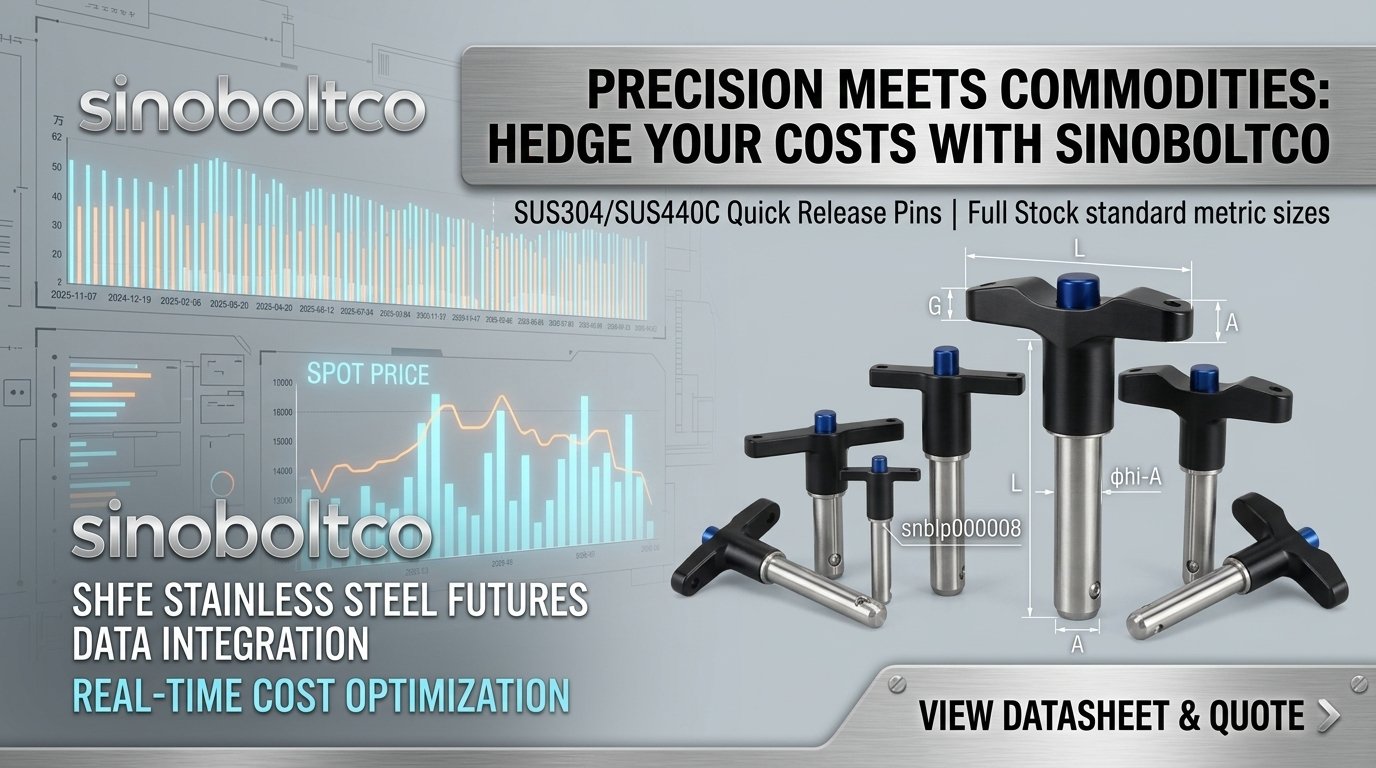
In overseas industrial hardware export trade, stainless steel—primarily SUS304 and high-hardness SUS440C—constitutes a core portion of raw material costs. As a flagship product in industrial fixturing and mechanical locking, the manufacturing cost of the T-Handle Quick Release Ball Lock Pin (Model: snblp000008) is directly tied to stainless steel futures price movements on the Shanghai Futures Exchange (SHFE).
Based on market data from late October 2026—including Wuxi/Foshan warehouse capacity, SHFE warrants, basis metrics, and spot price summaries—this analysis outlines stainless steel commodity trends and offers actionable hedging strategies for component sourcing.
1. Stainless Steel Fundamentals: Steady Inventory Depletion & Solid Spot Support
Recent market data shows that domestic stainless steel markets are operating under low warehouse inventories and declining warrant supplies:
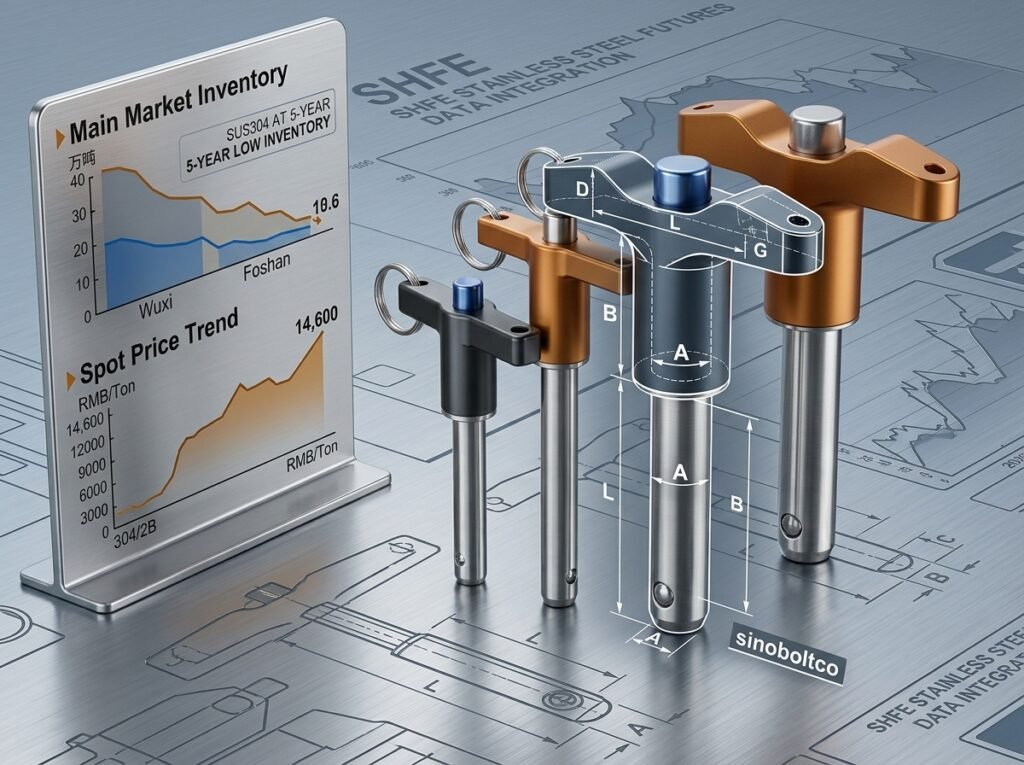
Low National Market Inventory: Wuxi stainless steel total inventory dropped to 514,100 tons, down 0.17% month-on-month, marking two consecutive periods of decline and remaining near five-year low levels.
Continuous Warrant Cancellation: SHFE stainless steel warrant inventory decreased to 58,593 tons, down 0.20% month-on-month, representing nineteen consecutive periods of drawdown to reach four-year lows. This reflects active spot delivery demand as physical manufacturing continues to absorb warehouse stocks.
2. Spot Price & Basis Trends: Firm Spot Performance with High Basis Levels
Spot prices in Wuxi have shown clear signs of stabilizing and rebounding:
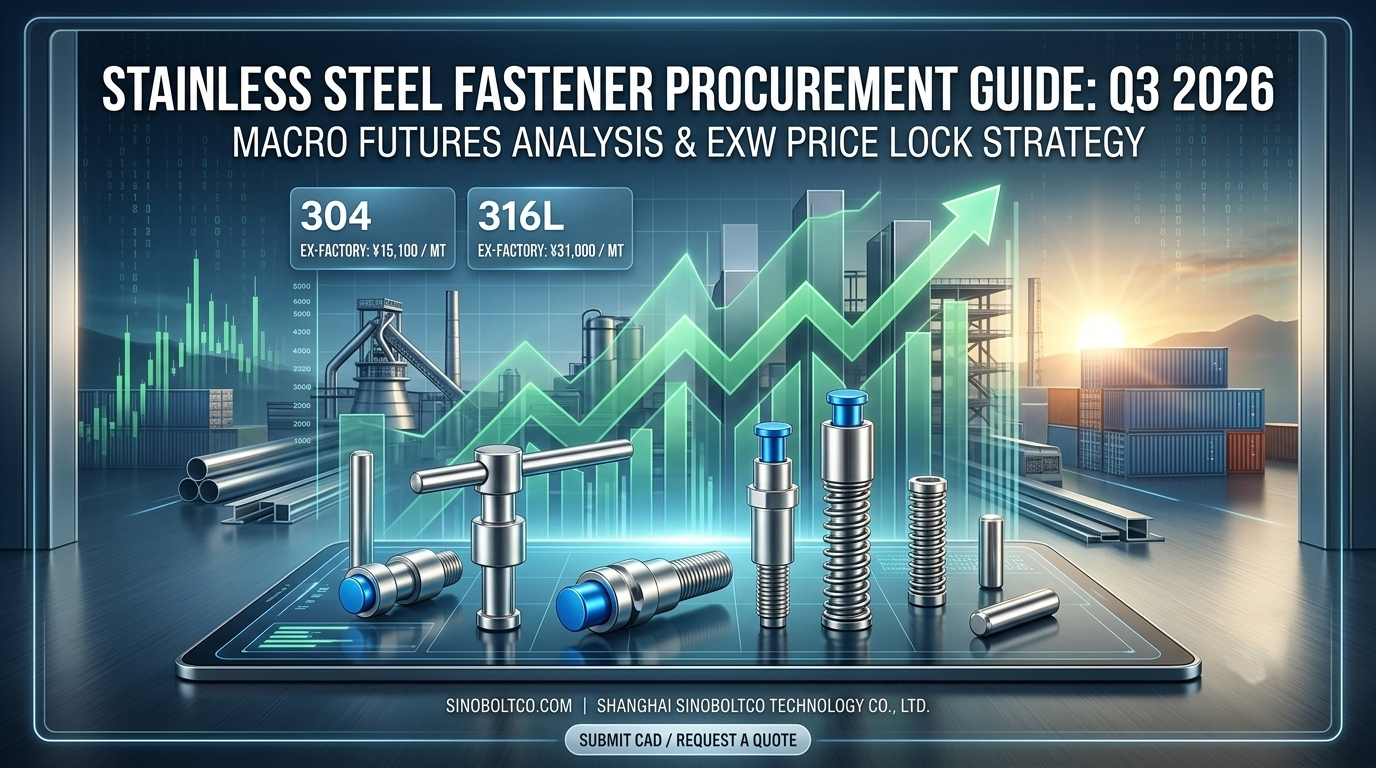
Spot Price Stabilization: Wuxi 304 spot prices quote at 14,600 RMB/ton, up 1.39% month-on-month. While still 6.94% below the five-year average, price levels have formed a firm floor.
Elevated Basis Levels: The basis (spot price minus main futures contract price) remains elevated between 900 and 1,200 RMB/ton (average ~971 RMB/ton). This spot premium requires industrial purchasers to manage spot market acquisition costs carefully.
3. Impact of Futures Markets on Precision Component Costs (snblp000008)
For sinoboltco’s core component—the T-handle quick release ball lock pin snblp000008—raw material composition connects directly to stainless steel futures and special steel spot markets:
Raw Material Breakdown:
Shaft & Internal Spring (SUS304 Stainless Steel): Accounts for 60%–70% of total pin weight. Raw material costs track 304 cold-rolled coil spot prices (~14,600 RMB/ton) and main SHFE contract prices.
Locking Balls (SUS440C High-Hardness Stainless Steel): Precision-quenched and ground for high wear resistance, with baseline costs influenced by chromium and nickel alloy market trends.
T-Handle (Anodized Aluminum Alloy): Lightweight, corrosion-resistant anodized aluminum.
When warehouse inventories hover near five-year lows and spot prices stabilize upwards, processing plants face higher procurement costs for round bars and wire rods. Without advance cost-locking mechanisms, component batch quotes become vulnerable to commodity price spikes.

4. Procurement & Risk Hedging Strategies
For industrial hardware and fixture buyers, sinoboltco recommends the following sourcing strategies:
Lock Long-Term Costs via Futures (Long Hedging): When main futures contracts trade at a discount to spot (wide basis), volume buyers or manufacturing plants can purchase stainless steel futures contracts (SS) to lock in raw material baselines for 3–6 months.
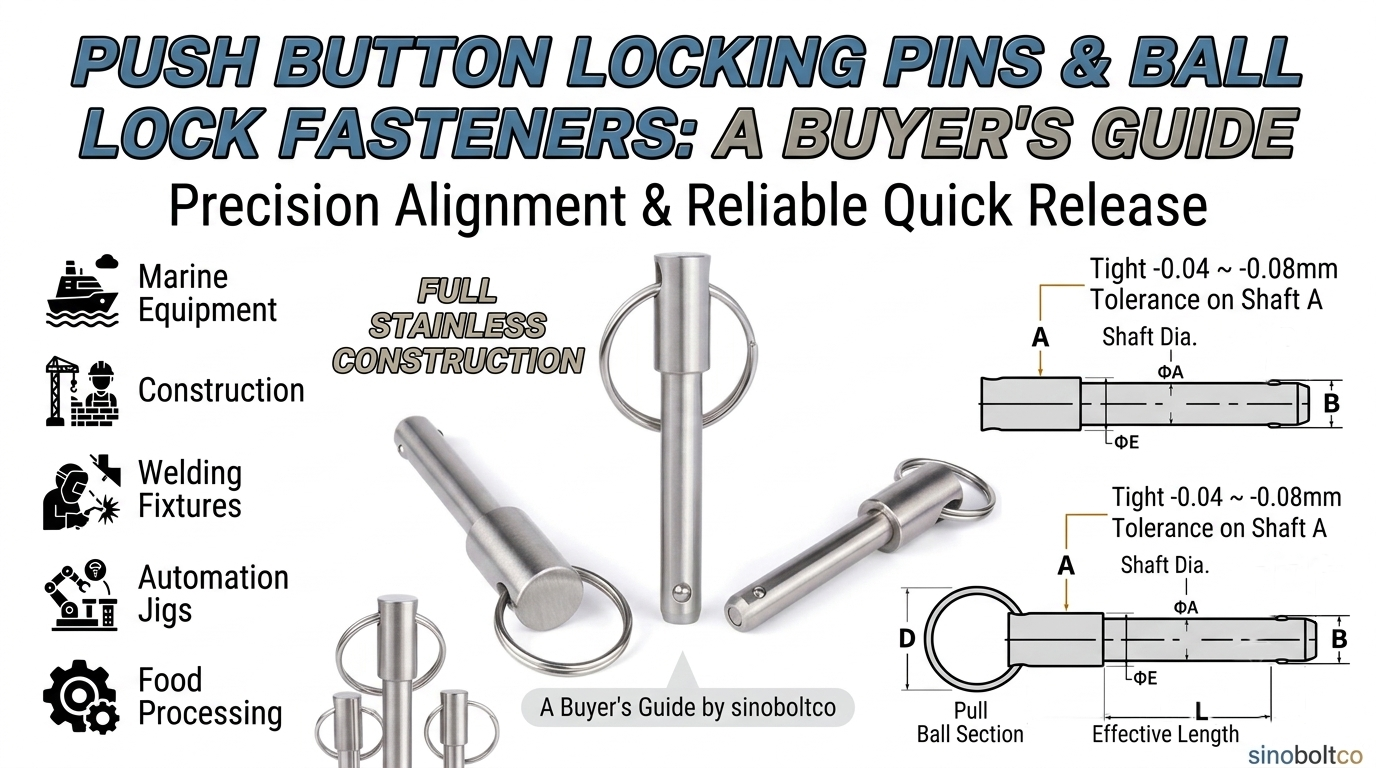
Establish Inventory During Low-Stock Nodes: With total inventories in Wuxi and Foshan at low levels, buyers of standard sizes (shaft diameters 5mm–25mm, grip lengths 10mm–100mm) should utilize sinoboltco’s stock program to mitigate supply chain disruption risks.
Utilize Standardized Product Codes: Specify exact ordering formats (
snblp000008-[Diameter A]-[Grip Length L], e.g.,snblp000008-10-55) during inquiries to ensure fast, tier-priced quotations during volatile raw material periods.
Summary
Low warehouse inventories and firm basis metrics indicate strong upward price support for raw stainless steel. Leveraging structured supply chain management, sinoboltco minimizes commodity volatility impacts to deliver reliable, high-precision industrial locking solutions globally.