Introduction:
In precision engineering, selecting the right quick-release fastener is more than just choosing a thread size. When designing modular jigs, automated machinery, or high-load structures, securing components quickly and reliably is critical. Quick-release ball lock pins are the go-to solution for tool-less clamping. However, to ensure safety, minimize mechanical play, and prevent shearing, understanding the exact dimensional tolerances is non-negotiable.
In this technical guide, we break down how to read a ball lock pin specifications chart and choose the perfect dimensions for your application.
1. Decoding the Key Dimensions of a Ball Lock Pin
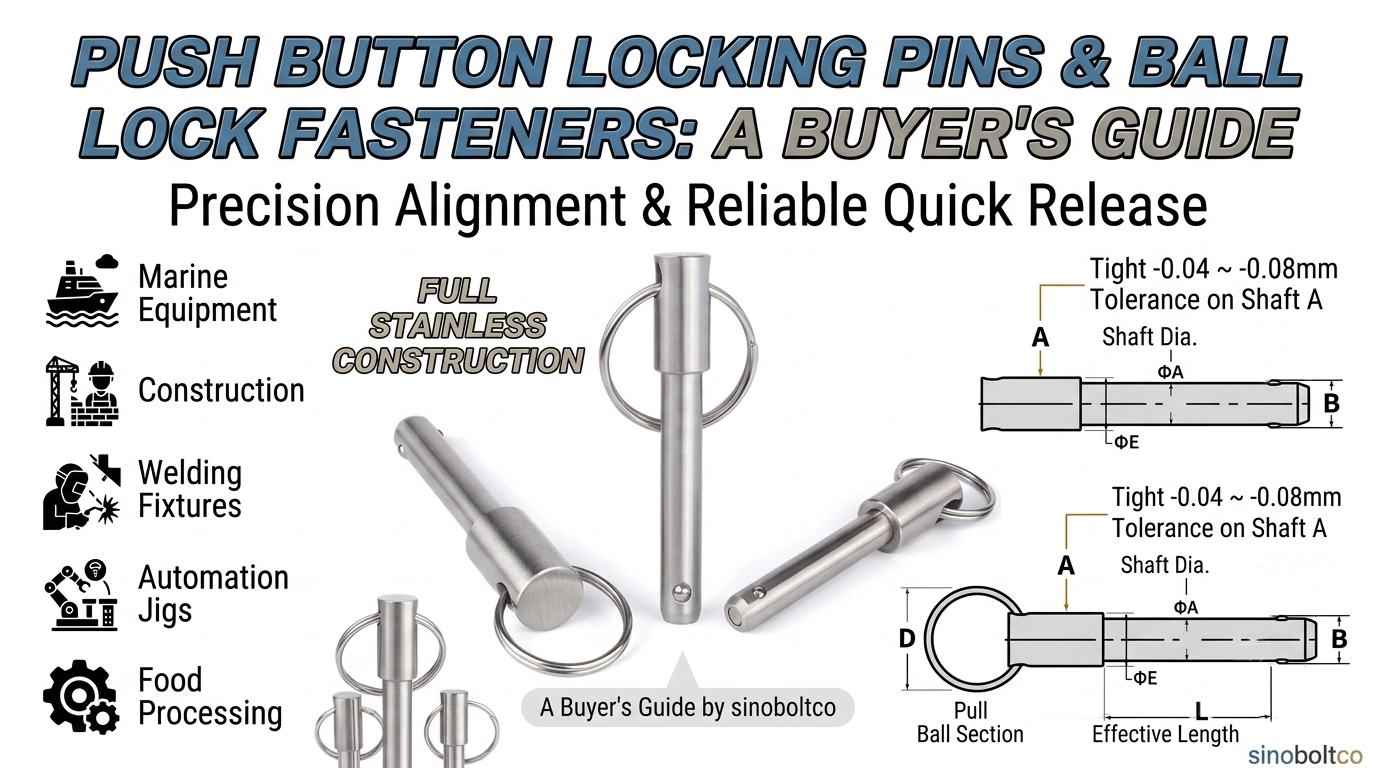
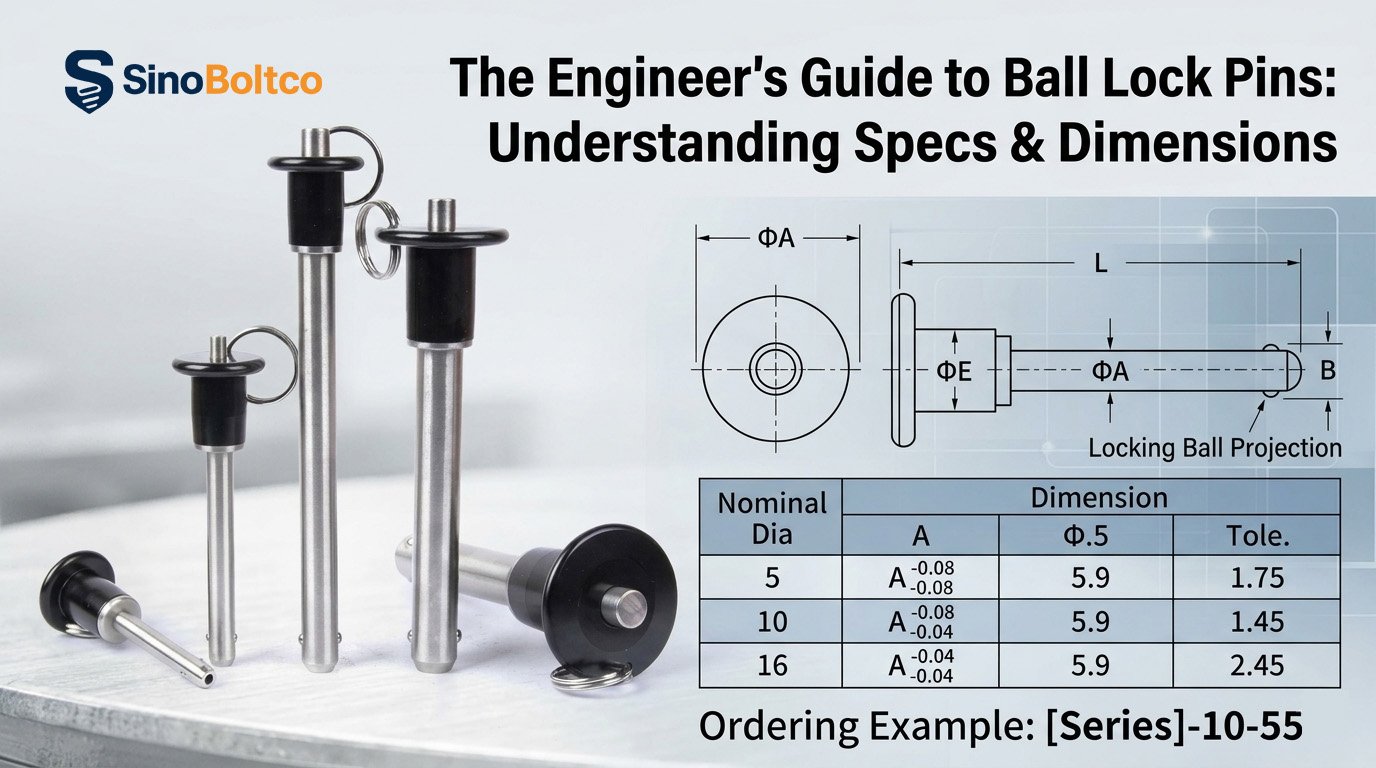
When looking at a standard engineering specification chart for ball lock pins, you will typically encounter several critical variables. Understanding what these represent is key to a flawless fit:
Shank Diameter (A): This is the actual outer diameter of the pin shank. For high-precision positioning, our pins are ground with strict negative tolerances (for example, -0.04mm to -0.08mm) to ensure a snug fit in standard H7 or H8 tolerance reamed holes, eliminating mechanical wobble.
Grip Length (L): This is the effective working length of the pin—measured from the underside of the handle collar to the top edge of the locking balls. This length must perfectly match the total thickness of the mating parts you are locking together.
Locking Ball Height (B) & Extended Length (C): The dimension B represents the outer width when the retention balls are fully projected. The distance C ensures there is enough clearance beyond the mating part for the balls to deploy and lock securely.
2. Standard Metric Dimension Specifications Reference
To assist your design phase, here is a quick-reference guide to standard metric dimensions for button-head stainless steel ball lock pins (available at Sinobolt):
| Shank Nominal Diameter (A) | Grip Length Range (L) | Ball Height (B) | Collar Diameter (E) | Button Projection (D) |
| 5 mm | 10 mm – 100 mm | 5.54 mm | 11.8 mm | 5.9 mm |
| 6 mm | 10 mm – 100 mm | 6.99 mm | 11.8 mm | 5.9 mm |
| 8 mm | 10 mm – 100 mm | 9.42 mm | 11.8 mm | 5.9 mm |
| 10 mm | 10 mm – 100 mm | 11.86 mm | 14.5 mm | 5.9 mm |
| 12 mm | 10 mm – 100 mm | 14.45 mm | 19.0 mm | 7.9 mm |
| 16 mm | 10 mm – 100 mm | 19.00 mm | 23.8 mm | 10.9 mm |
| 20 mm | 10 mm – 100 mm | 24.08 mm | 23.8 mm | 10.9 mm |
| 25 mm | 10 mm – 100 mm | 30.94 mm | 31.8 mm |
3. Step-by-Step Selection Guide for Engineers
Step 1: Calculate Your Double Shear Load
Before picking a diameter, determine the mechanical load the pin will bear. A 5mm pin is excellent for light electronic enclosures or medical equipment, whereas heavy-duty CNC fixtures or staging scaffolds will require a robust 16mm to 25mm diameter shank to handle high shear forces.
Step 2: Measure the Total Clamping Thickness
Your required grip length (L) should be equal to (or slightly larger than) the sum of the plate thicknesses you are fastening. If your plates total 48mm in thickness, choose a standard 50mm grip length pin. Never use a pin where the grip length is shorter than the combined plate thickness, as the locking balls will fail to deploy.
Step 3: Match the Material to Your Environment
Carbon Steel (zinc plated): Cost-effective, suitable for dry, indoor warehousing or general machine shops.
Stainless Steel (304 / 316): Highly recommended for food processing, marine, outdoor scaffolding, and medical devices due to its superior corrosion and wear resistance.
4. How to Order Custom Specifications
At Sinoboltco, we understand that unique engineering projects often require non-standard dimensions. Our standard ordering logic follows a simple, transparent system:
Product Type – Diameter (A) – Grip Length (L)
For example, if you require a 10mm diameter pin with a 55mm grip length, the configuration would simply be: [Series]-10-55
If you require customized sizes, unique handle colors (such as black anodized aluminum or bright metallic finishes), or attached lanyard rings to prevent loss on the job site, our engineering team is ready to assist.
Looking for CAD files or a volume quotation? Contact our technical support desk today at Sinobolt or send us your engineering drawings directly. Let’s make your fastening systems faster and safer.