
Titanium Bolts — Material Grades, Strength, Applications & Selection Guide
Category: Technical Guide
Author: SinoBolt Engineering Team
Updated: November 2025
Introduction
Titanium bolts are widely used in industries requiring high strength, lightweight materials, and excellent corrosion resistance. From aerospace engineering to high-performance racing motorcycles, titanium fasteners provide a superior performance-to-weight ratio compared to stainless steel or alloy steel fasteners.
This Technical Guide explains everything you need to know about titanium bolts, including material grades, strength comparison, manufacturing processes, and how to select the right type for your application.
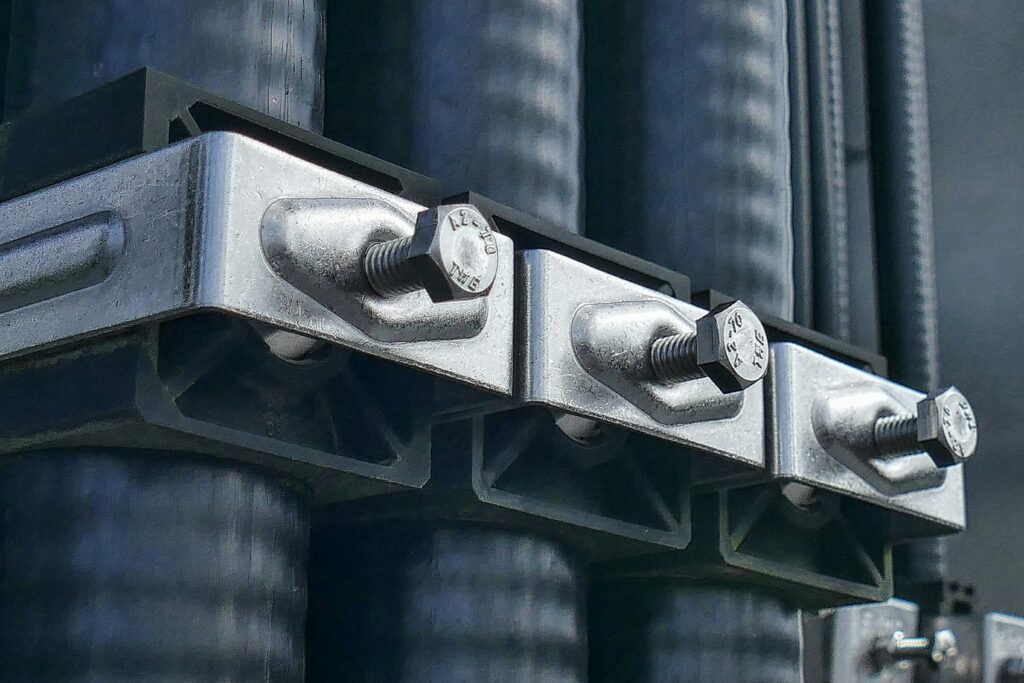
1. Material Grades of Titanium Bolts
Titanium bolts are mainly produced in two industrial grades: Grade 2 (commercially pure) and Grade 5 (Ti-6Al-4V). Each grade offers different mechanical properties.
1.1 Grade 2 Titanium (CP Titanium)
- Material Type: Commercially Pure Titanium
- Strength: Moderate
- Corrosion Resistance: Excellent
- Weight: Extremely light
- Applications:
- Marine environment
- Chemical processing
- Low-load structural components
Advantages: Excellent corrosion resistance in seawater and acidic environments.
Limitations: Lower strength compared to Gr5.
1.2 Grade 5 Titanium (Ti-6Al-4V)
- Composition: 6% Aluminum, 4% Vanadium
- Strength: Very high
- Weight: 40% lighter than steel
- Applications:
- Aerospace components
- Racing / Automotive
- Mountain bikes
- High-load machinery
Advantages: Best strength-to-weight ratio, excellent fatigue resistance.
Limitations: Higher cost; more difficult to machine.
1.3 Grade Comparison Table
| Property | Grade 2 | Grade 5 (Ti-6Al-4V) |
|---|---|---|
| Tensile Strength | 350 MPa | 900–1000 MPa |
| Density | 4.5 g/cm³ | 4.43 g/cm³ |
| Corrosion Resistance | ★★★★★ | ★★★★☆ |
| Weight Reduction vs Steel | ~40% | ~40% |
| Typical Use | Chemical / Marine | Aerospace / Racing |
2. Manufacturing Processes
High-performance titanium bolts require precise machining and strict quality control. Below is the standard manufacturing workflow at SinoBolt.
2.1 Raw Material Inspection
- Chemical composition analysis
- Mechanical property report
- Ultrasonic testing for internal defects
2.2 Forging or CNC Machining
Depending on the bolt design:
✔ Head forging (for hex bolts, flange bolts)
✔ CNC machining (for custom shapes or small batches)
2.3 Thread Rolling / Cutting
- Rolled threads → higher fatigue strength
- Cut threads → used for custom or small-quantity parts
Tolerance follows ISO, DIN, UNC, UNF standards.
2.4 Surface Treatment
Titanium bolts can be finished with:
- Polishing
- Anodizing (Gold / Blue / Rainbow / Purple)
- Sandblasting
- Passivation
2.5 Final Quality Control
- Tensile strength test
- Hardness test
- Dimensional inspection
- Salt spray test
- Fatigue test (for high-performance applications)
3. Industrial Applications
Titanium fasteners are used across multiple industries due to their unique material advantages.
3.1 Automotive & Racing
- Engine components
- Exhaust systems
- Brake systems
- Suspension systems
3.2 Aerospace Engineering
- Aircraft structures
- Engine components
- High-stress load-bearing assemblies
3.3 Bikes & Motorcycles
- Stem bolts
- Brake rotor bolts
- Crankset bolts
- Handlebar fasteners
3.4 Marine & Chemical Equipment
- Pumps
- Valves
- Heat exchangers
- Anti-corrosion assemblies
4. Common Mistakes When Buying Titanium Bolts
Avoid these common issues to reduce cost and improve performance:
- Choosing the wrong grade (Gr2 vs Gr5)
- Ignoring thread type (Metric / UNC / UNF)
- Not checking tolerance level
- Buying anodized titanium only for color—not performance
- Overlooking fatigue resistance
- Purchasing from suppliers without QC capability
- Not confirming material certification
5. How to Choose the Right Titanium Bolt
Before placing an order, confirm the following:
✔ Material Grade
Choose Gr5 for high strength, Gr2 for corrosion resistance.
✔ Size & Thread Type
Metric / UNC / UNF based on your machinery.
✔ Coating / Finish
Choose anodized for appearance or polished for smooth surface.
✔ Strength Requirement
Select based on tensile load.
✔ Tolerance & Precision
Critical for aerospace or CNC assemblies.
✔ Testing Reports
Always request:
- Material certificate
- Tensile test report
- Dimensional inspection
✔ Supplier Experience
Work with manufacturers specializing in titanium fasteners (like SinoBolt).
6. Why Choose SinoBolt for Titanium Bolts
- 15+ years in titanium fastener manufacturing
- ISO-certified production facility
- Strict QC with full testing reports
- CNC machining + forging capabilities
- Support small MOQ orders
- Fast delivery worldwide
- Custom design available based on drawings
7. FAQ
Q1: Can you provide sample bolts?
Yes. Samples are available for quality inspection.
Q2: Can you produce custom designs?
Yes. Provide drawings, 3D files, or sample pieces.
Q3: What is the typical lead time?
7–25 days depending on quantity & process.
Q4: Do you offer anodized colors?
Yes—gold, blue, rainbow, purple, black, etc.
Get a Quote
Looking for high-performance titanium bolts?
👉 WhatsApp: +86-18551681225
👉 Email: sinoboltcompany@sinoboltco.com