
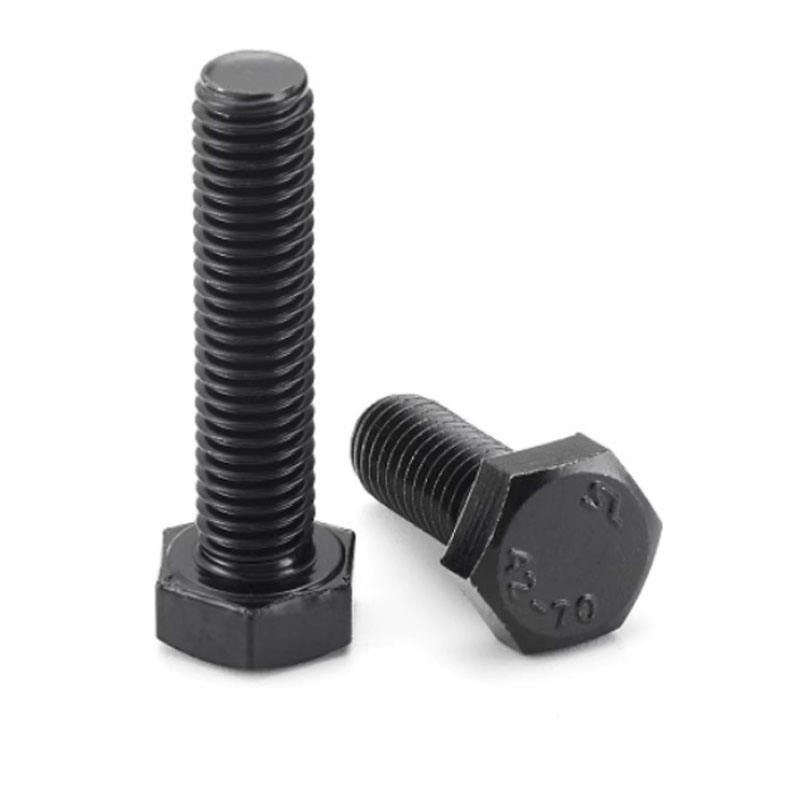
1. What Is a DIN933 Hex Bolt?
DIN933 is a German standard that defines fully threaded hexagon head bolts with metric threads. Bolts manufactured under this standard follow precise dimensional tolerances, ensuring consistency and interchangeability in industrial use.
Key Characteristics
Hexagonal head for easy tightening using standard wrenches or socket tools
Full thread design ensures strong grip across the entire bolt length
Metric thread profile compatible with DIN nuts and washers
Available in M3–M20, with M6 and M8 being the most used sizes
Available in multiple strength grades: 4.8, 8.8, 10.9, 12.9
Available in carbon steel, alloy steel, stainless steel
DIN933 bolts are designed for applications requiring secure fastening and resistance to shear, torque, and vibration.
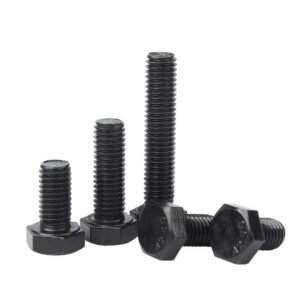
2. Why M6 and M8 Sizes Are the Most Popular
While DIN933 covers a broad range of metric sizes, M6 and M8 are the industry’s workhorses.
Why M6 is commonly used
Ideal for medium-load assemblies
Widely used in electronics housings, brackets, furniture, and mechanical frames
Easy to install without requiring large torque
Why M8 is widely demanded
Higher tensile strength
Perfect for automotive components, machinery, steel structures, industrial equipment
Works well in high-vibration environments
Together, M6 and M8 bolts cover more than 35% of global metric fastener applications, making them essential for any hardware inventory.
3. Material Options & How to Choose the Right One
DIN933 bolts can be manufactured from multiple materials. Each option has different mechanical properties and environmental suitability.
| Material | Properties | Recommended Applications |
|---|---|---|
| Carbon Steel (Grade 8.8, 10.9, 12.9) | High strength, economical | Machinery, automotive, construction |
| Stainless Steel 304 (A2-70) | Corrosion-resistant, durable | Outdoor, marine, food equipment |
| Stainless Steel 316 (A4-80) | Superior corrosion resistance | Chemical plants, coastal installations |
| Zinc-Plated Steel | Anti-rust coating, low cost | Indoor equipment, general use |
| Black Oxide Steel | Anti-corrosion, aesthetic | Automotive, electronics |
Selecting the right material
Outdoor use → Stainless Steel 304/316
High-temperature or corrosive environments → 316 or alloy steel
Heavy machinery → Grade 10.9/12.9
General assembly → Zinc-plated carbon steel
4. Strength Grades Explained
Understanding bolt grades is crucial for engineering calculations.
Common DIN933 Strength Classes
4.8 → Light-duty fastening
8.8 → Standard industrial grade
10.9 → High-strength machinery grade
12.9 → Heavy-duty structural applications
Example: 8.8 Grade
Tensile strength: 800 MPa
Yield strength: 640 MPa
When to use high-strength grades
Equipment subjected to impact force
High vibration machinery
Load-bearing steel structures
Choosing a bolt with insufficient grade can cause fatigue failure or shearing under load, leading to serious safety hazards.
5. How to Select the Right DIN933 Bolt (Step-by-Step Guide)
Step 1 — Determine Thread Size (M6/M8/M10 etc.)
Consider the hole diameter and load requirements.
Step 2 — Select Thread Length
For full-thread bolts:
Engagement = 1–1.5 × bolt diameter ensures maximum strength.
Step 3 — Choose Material & Surface Finish
Based on environmental conditions.
Step 4 — Choose Strength Grade
Match the mechanical load requirements of your project.
Step 5 — Pair with the Correct Nut & Washer
DIN934 nuts + DIN125A washers are the standard compatible hardware.
6. Installation Guidelines for Maximum Performance
Proper installation affects bolt lifespan and structural safety.
Torque Recommendations
Use torque charts appropriate for:
Bolt size
Strength grade
Lubrication conditions
Avoid Over-tightening
Over-tightened bolts may:
Stretch
Reduce yield strength
Fail prematurely
Avoid Under-tightening
Under-tightened bolts may:
Loosen under vibration
Cause misalignment
Result in structural instability
Best Practice
Use a calibrated torque wrench to achieve precise tightening.
7. Industry Applications of DIN933 M6 & M8 Bolts
Industrial Machinery
Secures motors, frames, conveyor systems, and robotic parts.
Automotive
Used in engine components, brake systems, and suspension assemblies.
Construction & Steel Structures
Anchoring, framework joints, and panel installation.
Electronics & Appliances
Mounting brackets, housing covers, internal fastener systems.
Furniture & DIY
Easy installation and strong clamping ability.
The broad versatility of DIN933 bolts makes them an essential engineering component worldwide.
8. Purchasing Guide — What to Look For in a Supplier
When sourcing DIN933 bolts, ensure the supplier provides:
✔ Material certification (ISO/ROHS)
✔ Strength grade markings
✔ Accurate thread tolerance
✔ Surface finish quality
✔ Consistent hardness and tensile testing
✔ Bulk order customization
✔ Fast lead times and stable production capacity
A reliable supplier minimizes assembly issues and ensures consistent installation performance.
9. Conclusion: Why DIN933 Hex Bolts Are Essential for Modern Engineering
DIN933 hex bolts are a fundamental part of industrial construction and mechanical assembly. Their standardized dimensions, high load capacity, broad material options, and wide application range make them one of the most dependable fasteners available.
Whether you are assembling machinery, constructing steel structures, or performing automotive repairs, M6 and M8 DIN933 bolts offer the ideal balance of strength, durability, and compatibility.
Integrating high-quality DIN933 bolts into your projects ensures safety, stability, and long-term performance.