
1. Introduction: The Hidden Cost of Bearing Failure
In industrial operations, a bearing is more than just a component; it is the heart of rotating machinery. However, in industries like food processing, marine engineering, and chemical manufacturing, standard chrome steel (GCr15) bearings are often the “weakest link.” Moisture and chemical exposure lead to rapid oxidation, resulting in catastrophic equipment failure and expensive downtime.
This is where (AISI 440C equivalent) stainless steel bearings step in. In this technical deep-dive, we explore why this specific material grade is the gold standard for harsh environments.
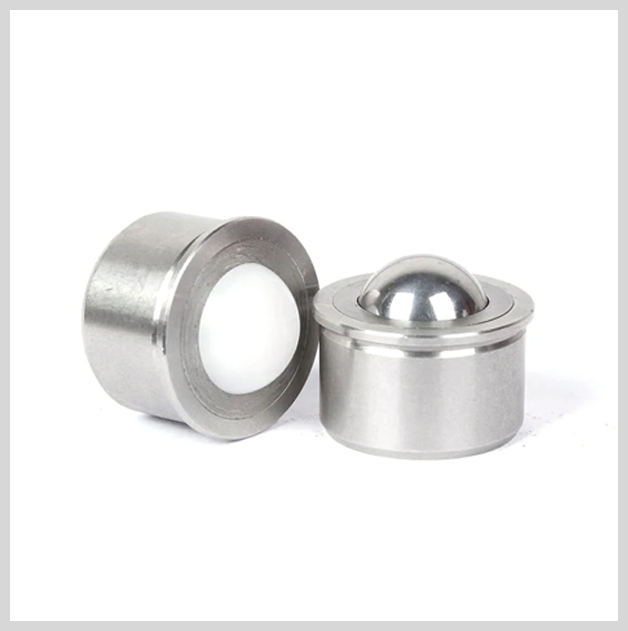
2. Material Science: What Makes Unique?
It is a martensitic stainless steel characterized by its high carbon and high chromium content. Unlike the 300-series stainless steel (which is highly corrosion-resistant but soft), It can be heat-treated to achieve high hardness (HRC 55-58), making it ideal for load-bearing applications.
| Property | Stainless Steel | Standard Chrome Steel (GCr15) |
| Corrosion Resistance | Excellent (Rust-proof) | Poor (Oxidizes quickly) |
| Hardness (HRC) | 55 – 58 | 60 – 64 |
| Operating Temp | Up to 300°C (with special lube) | Up to 120°C |
| Magnetism | Magnetic | Magnetic |
3. Key Technical Advantages for Engineers
A. Superior Passivation Layer
It contains over 16% Chromium. When exposed to oxygen, it forms a microscopic, self-healing Chromium Oxide (Cr_2O_3) layer. This passive film prevents oxygen from reaching the underlying steel, effectively stopping rust before it starts.
B. Precision Deep-Groove Geometry
Our products bearings utilize a Deep Groove design. This allows for:
High radial load capacity.
Moderate axial load capacity in both directions.
Low friction torque, which is essential for high-speed applications.
C. Versatile Sealing Options (ZZ vs. 2RS)
To further protect the internal raceways, we offer:
ZZ (Metal Shields): Best for high-speed, low-friction needs in dusty environments.
2RS (Rubber Seals): Essential for “wash-down” environments where liquid ingress is a constant threat.
4. Application Scenarios: Where we Excels
Food & Beverage Processing: Capable of withstanding frequent cleaning with caustic detergents and high-pressure water.
Medical & Pharmaceutical: Non-reactive surfaces that maintain sterility and prevent contamination in laboratory centrifuges and mixers.
Marine & Offshore: Saltwater is the enemy of steel. we provides the necessary longevity for deck machinery and underwater sensors.
Automotive Aftermarket: Ideal for components exposed to road salt and extreme weather.
5. Maintenance Pro-Tip: Lubrication is King
Even a stainless steel bearing requires the right lubricant. For food-grade applications, we recommend H1-certified synthetic greases. For high-temperature vacuum environments, solid lubricants or specialized fluorinated greases are required to prevent outgassing and premature wear.
6. Conclusion: A Long-Term Investment
While the initial cost of SVD430 stainless steel bearings may be higher than carbon steel, the Total Cost of Ownership (TCO) is significantly lower. By reducing replacement frequency and preventing unplanned maintenance, It ensures your production line stays moving.
Need a custom bearing solution? Our engineering team can help you select the right tolerances (ABEC 1-7) and lubrication for your specific needs.