
Understand metric thread sizes from M3 to M10. Learn diameter differences, typical applications, load logic, and how to choose the right threaded rod size.
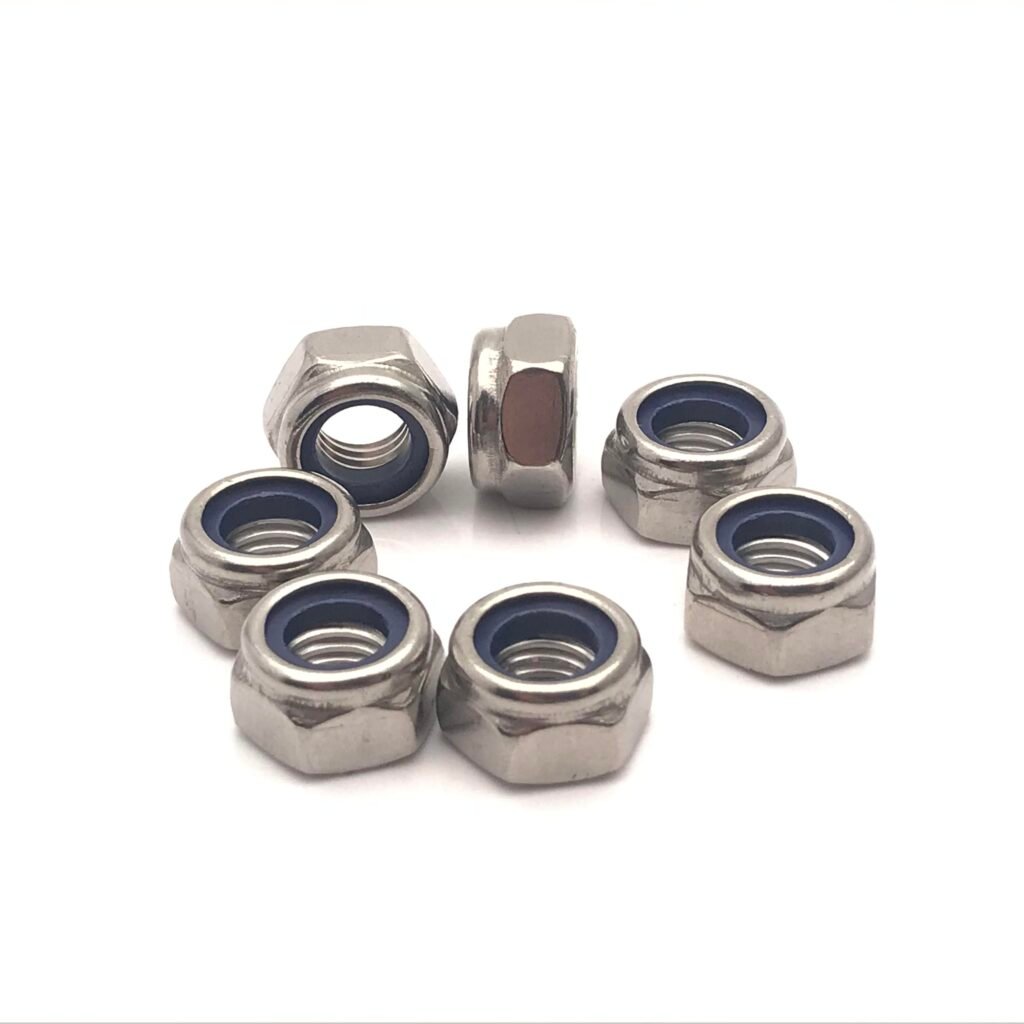
Understand metric thread sizes from M3 to M10. Learn diameter differences, typical applications, load logic, and how to choose the right threaded rod size.
Introduction
Metric thread sizes such as M3, M4, M5, M6, M8, and M10 are widely used across industrial, automotive, construction, and mechanical applications.
However, many buyers and engineers still misunderstand what these sizes actually represent — and more importantly, how to choose the correct size for a real application.
Selecting the wrong threaded rod size can result in:
Insufficient load capacity
Thread stripping
Excessive vibration loosening
Over-engineering and unnecessary cost
This guide explains metric thread sizes from M3 to M10 in a clear, practical way — focusing on diameter, typical usage, and selection logic, not just definitions.
What Does “M” Mean in Metric Thread Sizes?
The letter “M” indicates an ISO metric screw thread.
The number following the “M” refers to the nominal outer diameter of the thread in millimeters.
Examples:
M6 → approximately 6 mm outer thread diameter
M10 → approximately 10 mm outer thread diameter
Metric threads are standardized under ISO metric thread standards, ensuring global compatibility between threaded rods, nuts, and other fasteners.
Metric Thread Size Overview (M3–M10)
The table below summarizes the most commonly used metric threaded rod sizes and their typical applications.
| Thread Size | Nominal Diameter | Typical Applications |
|---|---|---|
| M3 | 3 mm | Electronics, light fixtures, small assemblies |
| M4 | 4 mm | Control panels, brackets, light-duty mounts |
| M5 | 5 mm | Furniture hardware, enclosures |
| M6 | 6 mm | Automotive parts, machinery, general industrial use |
| M8 | 8 mm | Structural supports, frames, equipment mounting |
| M10 | 10 mm | Heavy-duty construction, load-bearing assemblies |
👉 Key principle:
As the diameter increases, load capacity and stiffness increase, but so do weight and material cost.
M3–M5: Small Metric Thread Sizes (Precision Applications)
M3 Threaded Rods
M3 threaded rods are primarily used in low-load, precision applications.
Common uses:
Electronics assemblies
PCB mounting
Small brackets
They are not designed for structural loads but excel where compact size and precision are required.
M4 Threaded Rods
M4 offers slightly more strength than M3 while remaining compact.
Typical applications:
Control cabinets
Light metal frames
Small mechanical fixtures
M4 is often chosen when M3 is insufficient but space remains limited.
M5 Threaded Rods
M5 represents a transition size between light-duty and general-purpose fasteners.
Used in:
Furniture manufacturing
Sheet metal assemblies
Equipment housings
M5 threaded rods provide better stiffness without significantly increasing bulk.
M6: The Most Common General-Purpose Size
Why M6 Is So Popular
M6 threaded rods are one of the most widely used metric sizes in industry.
Reasons:
Balanced strength-to-size ratio
Compatible with many standard components
Suitable for moderate vibration environments
Typical applications:
Automotive components
Machinery assembly
Industrial equipment mounting
For many buyers, M6 is the default choice unless specific constraints require a smaller or larger size.
M8–M10: Structural and Load-Bearing Sizes
M8 Threaded Rods
M8 threaded rods are commonly used where structural integrity and rigidity are required.
Applications include:
Machine frames
Support brackets
Heavy equipment installation
M8 provides significantly higher load capacity compared to M6, making it suitable for semi-structural applications.
M10 Threaded Rods
M10 threaded rods are considered heavy-duty fasteners.
Typical uses:
Construction anchoring
Load-bearing steel structures
Industrial machinery foundations
M10 is often selected when safety margins and long-term durability are critical.
Thread Size vs Load: Selection Logic (Not Just Numbers)
Choosing a threaded rod size is not only about diameter.
You should also consider:
Load direction (tension vs shear)
Vibration and dynamic forces
Material type (stainless steel vs carbon steel)
Engagement length with nuts
👉 General guideline:
Thread engagement length should be at least 1.5 × the thread diameter for reliable fastening.
Common Mistakes When Choosing Thread Sizes
❌ Choosing the Smallest Possible Size
This often leads to thread stripping or premature failure.
❌ Over-Engineering
Using M10 where M6 would suffice increases cost and installation difficulty.
❌ Ignoring Environment
Corrosive environments may require stainless steel even for larger sizes.
Metric Thread Size Compatibility
All M3–M10 threaded rods are designed to work with:
ISO metric nuts
Metric washers
Standard metric tapped holes
Mixing metric and imperial threads should always be avoided.
How to Choose the Right Metric Thread Size (Quick Checklist)
Before ordering, ask:
What load will the threaded rod carry?
Is vibration present?
Indoor or outdoor environment?
Space limitations?
Standardization requirements (ISO)?
Answering these questions will quickly narrow down the correct size.
Conclusion
Understanding metric thread sizes from M3 to M10 helps ensure safer designs, longer service life, and lower maintenance costs.
By selecting the correct diameter based on application, load, and environment, you avoid common fastening problems and achieve reliable performance.
👉 Looking for ISO-compliant metric threaded rods from M3 to M10?
Explore our stainless steel threaded rod solutions or request a technical datasheet today.