
alvanized Carbon Steel Self-Clinching Nuts (SP Series):
A Technical Guide for Sheet Metal Fastening Applications
Introduction
In modern sheet metal assembly, traditional fastening methods such as welding, tapping, or loose nuts often introduce issues including thread damage, inconsistent strength, high labor costs, and corrosion risks.
Self-clinching nuts, especially galvanized carbon steel SP series (M2–M12), have become a preferred solution for manufacturers seeking strong, permanent, and efficient fastening in thin metal panels.
This technical article explains how SP self-clinching nuts work, why galvanized carbon steel is widely used, and how to select the correct specification for industrial applications.
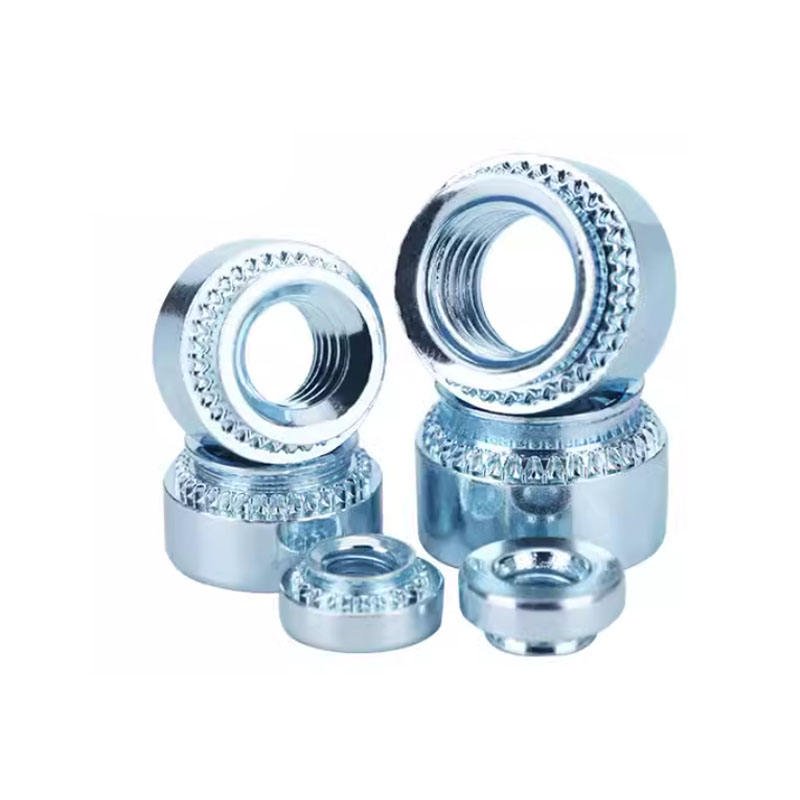
1. What Is an SP Self-Clinching Nut?
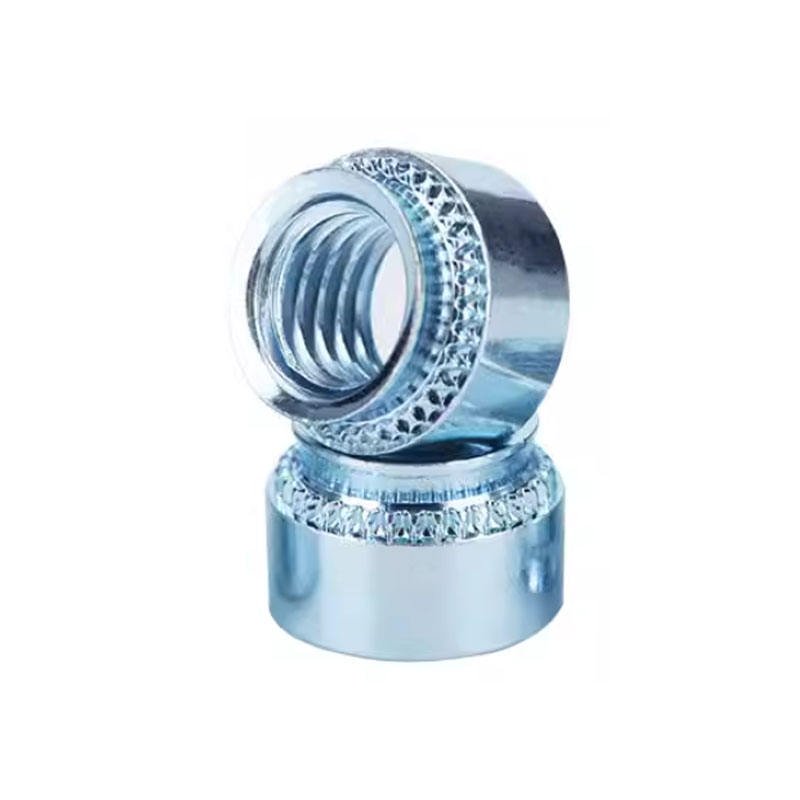
An SP self-clinching nut is a press-fit fastener designed to be permanently installed into thin sheet metal. During installation, the nut is pressed into a pre-punched hole using a parallel force (usually via a press). The surrounding metal flows into the nut’s undercut, creating a mechanical interlock.
Key Characteristics
- Permanently fixed in the panel
- No welding or threading required
- Provides reusable internal threads
- Maintains flush or low-profile surface
- Excellent resistance to torque-out and push-out forces
This makes SP nuts ideal for high-volume production and precision assemblies.
2. Why Choose Galvanized Carbon Steel?
2.1 Carbon Steel Core Strength
Carbon steel offers:
- High tensile and shear strength
- Stable mechanical performance under load
- Cost efficiency compared to stainless steel
- Suitability for mass production and OEM projects
It is widely used in automotive, machinery, enclosures, industrial equipment, and structural assemblies.
2.2 Galvanized Surface Protection
The zinc-galvanized coating provides:
- Corrosion resistance against moisture and oxidation
- Extended service life in industrial environments
- Improved appearance and uniform surface finish
- Compliance with common industrial standards
Compared to plain carbon steel, galvanized self-clinching nuts are far more reliable for outdoor, humid, or semi-corrosive conditions.
3. Size Range and Specification Overview (M2–M12)
SP self-clinching nuts are available in a wide metric range:
| Thread Size | Typical Applications |
|---|---|
| M2 – M3 | Electronics housings, control panels |
| M4 – M5 | Sheet metal cabinets, light machinery |
| M6 | Automotive panels, industrial enclosures |
| M8 | Structural frames, equipment housings |
| M10 – M12 | Heavy machinery, load-bearing assemblies |
Important Selection Factors
- Sheet thickness compatibility
- Hole diameter tolerance
- Required torque strength
- Load and vibration conditions
- Corrosion exposure level
Correct size selection ensures maximum clinch strength and long-term reliability.
4. Installation Principles and Best Practices
4.1 Installation Method
SP self-clinching nuts must be installed using:
- A parallel press (manual or hydraulic)
- Proper installation anvil
- Correct hole size and panel hardness
Hammering or angled force must be avoided, as it can damage both the nut and the panel.
4.2 Common Installation Mistakes
- Incorrect hole diameter
- Installing into overly hard or brittle panels
- Insufficient press force
- Misalignment during pressing
Following proper installation guidelines ensures:
- Full clinch engagement
- Maximum torque-out resistance
- No panel deformation
5. Performance Advantages Over Traditional Fasteners
| Feature | SP Self-Clinching Nut | Weld Nut | Tapped Hole |
|---|---|---|---|
| Installation Speed | Very Fast | Slow | Medium |
| Heat Distortion | None | High | None |
| Thread Reusability | Excellent | Good | Limited |
| Corrosion Risk | Low (Galvanized) | High | Medium |
| Thin Sheet Suitability | Excellent | Poor | Poor |
For thin metal applications, self-clinching nuts clearly outperform traditional solutions.
6. Typical Industrial Applications
Galvanized carbon steel SP self-clinching nuts are widely used in:
- Automotive body panels
- Electrical and control cabinets
- HVAC systems
- Industrial machinery housings
- Mining and construction equipment
- Sheet metal enclosures
- Water treatment and infrastructure equipment
Their reliability and ease of installation make them a standard fastening solution in industrial manufacturing.
7. OEM & Customization Considerations
Manufacturers often require:
- Custom thread tolerances
- Alternative coatings (black zinc, nickel, HDG)
- Bulk packaging or branded packaging
- Private labeling for distribution
SP self-clinching nuts are well-suited for OEM and ODM programs, supporting consistent quality at scale.
Conclusion
Galvanized carbon steel SP self-clinching nuts (M2–M12) provide an optimal balance of strength, corrosion resistance, cost efficiency, and installation reliability. For manufacturers working with thin sheet metal, they eliminate many of the limitations associated with welding or tapping while improving assembly efficiency and product durability.
Selecting the correct specification and following proper installation methods ensures long-term fastening performance across a wide range of industrial applications.